Humpback whales travel more than 3,500 miles from the cold Alaskan feeding grounds to the warm Hawaiian breeding grounds every winter. It is one of the longest migrations of any mammal on earth.
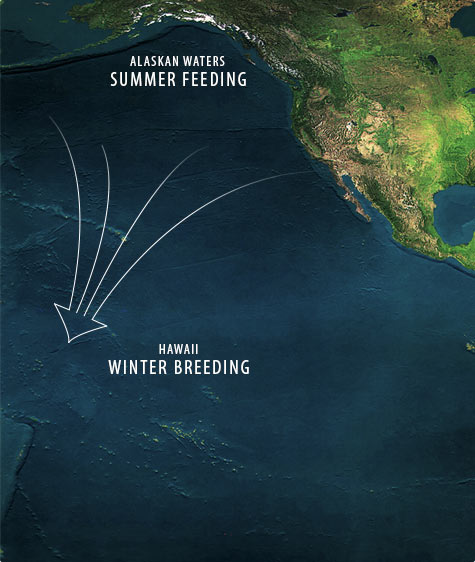
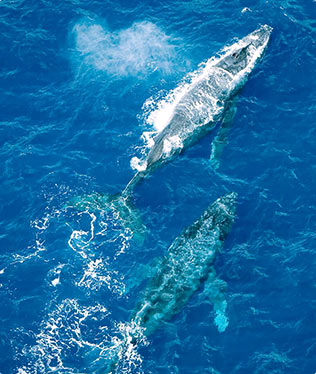
Marine researchers note that humpbacks typically travel 3–7 miles per hour with minimal rest. A one-way journey often takes 4–6 weeks, and in some cases as little as 36 days. Historically, 8,000–10,000 humpbacks visited Hawaiʻi each year, but the population continues to grow. As of October 2024, NOAA estimates 11,278 North Pacific humpbacks migrate to Hawaiian waters annually.
Why do North Pacific
humpback whales migrate
to Hawaiʻi?
Humpbacks return to Hawaiʻi for three primary reasons:
- Breeding
- Birthing
- Raising their calves in safety
The warm, subtropical conditions around Maui offer ideal nursery grounds. With a gestation period of 11–12 months, calves are both conceived and born in Hawaiian waters. Scientists believe humpbacks favor Hawaiʻi for its warm temperatures, underwater visibility, varied ocean depths, and relative lack of natural predators.