Mating
& Birthing

The North Pacific humpback whales mate in Hawai‘i’s oceans. These whales are polygamous mammals, meaning they are not monogamous and will mate with multiple partners during a season.

Male humpback whales do not take part in raising calves. Genetic studies show that across a female’s lifetime, her calves typically have different fathers. After mating, females are rarely seen with the males involved.

View more
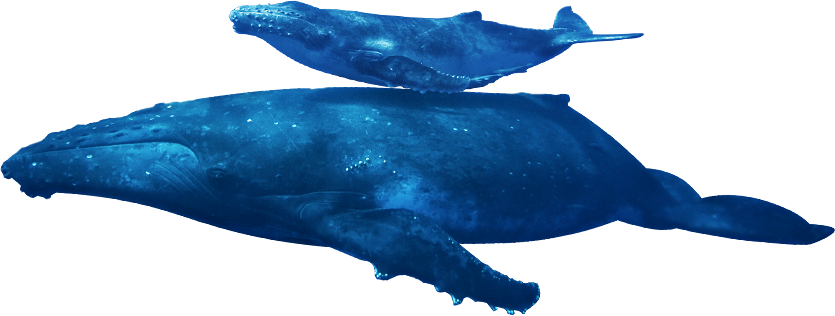

humpback whale mother and her calf
humpback whale conservation graph

12

months is a
humpback whale
gestation period

2000

pounds is an
average weight
of calves

1

inch per day
is the rate of
calves growth

turtle

Mating
& Birthing

Genetic studies show that across a female’s lifetime, her calves typically have different fathers. After mating, females are rarely seen with the males involved.

Male whales do, however, compete intensely during the season. You’ll often see males guarding or escorting females during their time in Hawai‘i. Throughout winter, these males show highly aggressive behavior toward rivals, including chasing, vocal displays, bubble bursts, tail thrashes, and deliberate body strikes. These confrontations can cause injuries, though they do not fight to the death.

Humpback whales have a gestation period of 11–12 months. Calves are born at 13–16 feet in length and weigh roughly 2,000 pounds at birth. They nurse on their mother’s 50% fat milk, gaining about 100 pounds per day and growing approximately one inch per day. Humpback mothers are protective, attentive, and highly nurturing. Calves are typically weaned at 4–6 months old.

By early spring, young calves can be seen practicing essential survival skills near the ocean’s surface: breaching, tail slapping, rolling, and building strength. These early behaviors prepare them for the long migration back to Alaska and form the foundation of their adult survival patterns.