Biology

North Pacific humpback whales are the fifth-largest whale species in the world and typically weigh 25–40 tons, with newborn calves weighing around 1 ton at birth.


US UnitsEU Units

20

minutes is the
maximum dive
time

80,00036 200

poundskg is the weight of
an adult whale, equal
to 6 elephants

40

minutes a male
humpback's song
often lasts

10045

poundskg a whale
calf can grow
every day

50

years is average
life expectancy

3,5005 632

mileskilometers humpback
whales migrate
each year

Humpback whales can grow up to 60 feet in length, with females generally larger than males.

Their upper (dorsal) bodies are dark gray with distinct white patterns on their flippers and bellies. Most individuals live about 50 years, although some have been documented living into their 80s or 90s, and they reach sexual maturity between 5–7 years of age.

Humpback whale infographic
View more

Biology

Unlike many marine animals, humpbacks follow a strict seasonal cycle. They feed exclusively in Alaskan waters during the summer, consuming up to 3,000 pounds of krill, plankton, and small fish per day. During their winter stay in Hawaii, they do not feed at all. Their bodies rely entirely on the blubber reserves built during the feeding season.

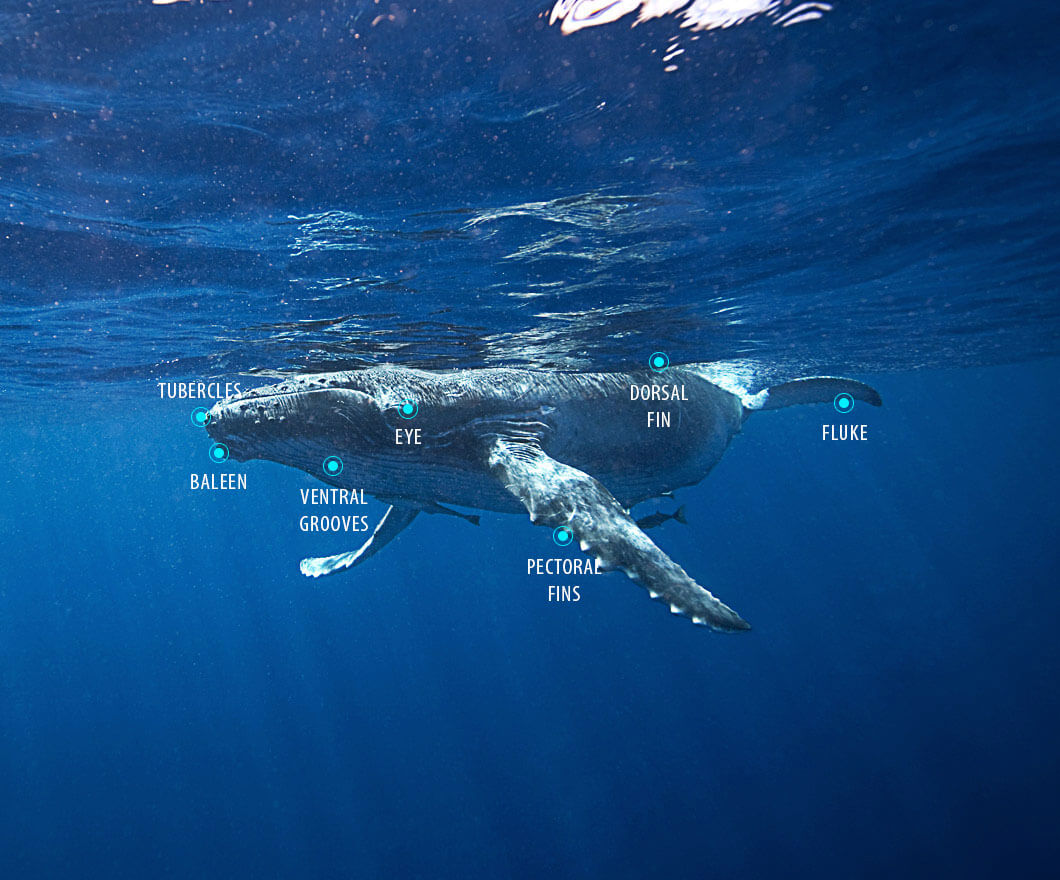
The name “humpback” comes from the pronounced arch in their back when they prepare to dive. Their heads are covered in rounded knobs called tubercles, each containing a single sensory hair that may help the whale detect movement—similar to a whisker on land mammals.

Humpbacks have 20–35 ventral grooves running along their underside, allowing their throat area to expand significantly while feeding. Compared to more streamlined whale species, humpbacks have a more rounded body that narrows at the peduncle, the muscular region before the tail.

Their long pectoral fins, often up to 15 feet, are the largest appendages of any animal on Earth. These fins can range from all-white to all-black and often display distinctive patterns. The color patterns on their dorsal fins and tail flukes act like a fingerprint, allowing researchers to identify individual whales across seasons.